Don't Miss Our Limited-Time HVAC Savings for North Myrtle Beach Homeowners
As summer temperatures climb along the Grand Strand, North Myrtle Beach homeowners depend on their air conditioning systems more than any other appliance. When your AC needs refrigerant service in North Myrtle Beach, SC, understanding the basics of refrigerant — what it does, why levels drop, and what modern alternatives mean for your system — helps you make smart decisions about repair and maintenance. MCC Fix My AC provides professional refrigerant service, leak detection, and system diagnostics for homes throughout the North Myrtle Beach, Myrtle Beach, and Conway areas.
What Refrigerant Does in Your Air Conditioning System
Refrigerant is the working fluid of your air conditioning system — the substance that absorbs heat from inside your home and releases it outside. In a properly functioning AC, refrigerant cycles continuously between the indoor evaporator coil and the outdoor condenser unit, changing state from liquid to gas and back again as it absorbs and releases heat. Without refrigerant, the system moves air but removes no heat — your AC runs continuously but your home stays warm.
A common misconception is that AC systems “use up” refrigerant the way a car uses fuel. They do not. A sealed refrigerant circuit recirculates the same charge indefinitely. Low refrigerant levels mean only one thing: there is a leak somewhere in the system. This is an important distinction because simply adding refrigerant without finding and repairing the leak is a short-term fix that will fail again and — after 2020 — has significant regulatory implications.
Modern residential systems in North Myrtle Beach, SC use R-410A refrigerant (the current standard since the 2010 phaseout of R-22). However, new systems installed after January 2025 are transitioning to R-454B (Puron Advance) and R-32 refrigerants with lower global warming potential under EPA regulations implementing the AIM Act. If your system is 15+ years old and uses R-22 (freon), read the section below on phaseout implications.
Why AC Systems Lose Refrigerant in South Carolina Homes
Refrigerant leaks in Grand Strand HVAC systems come from several sources, with coastal South Carolina’s salt air environment creating specific vulnerabilities not found in inland systems.
Corrosion from salt air. Coastal properties within 1–5 miles of the ocean are exposed to airborne salt that accelerates corrosion of copper refrigerant lines and aluminum coil fins. Formicary corrosion — a pinhole corrosion pattern that forms when copper is exposed to formaldehyde (from household products) and moisture — is particularly common in coastal South Carolina homes and creates refrigerant leaks that are difficult to locate without specialized equipment.
Vibration fatigue at connections. Refrigerant line sets connect the indoor and outdoor units, and vibration from the compressor and fans creates stress at fittings over time. These joints can develop slow leaks that take months or years to noticeably affect system performance.
Manufacturing defects. A small percentage of new systems ship with minor defects in coil welds or fittings that develop into leaks within the first 1–5 years of service. Most systems with this issue surface under warranty.
Mechanical damage to line set. Landscape work, pest control activity, and home renovation can nick or puncture refrigerant lines running along the home exterior or through walls. Any visible refrigerant line damage should be inspected immediately.
- Salt air corrosion — most common cause in North Myrtle Beach coastal homes
- Formicary (pinhole) corrosion on copper coils and lines
- Vibration fatigue at refrigerant line fittings
- Manufacturing defects in coil welds (often under warranty)
- Physical damage to line set from landscaping or renovation
Signs Your North Myrtle Beach AC System Is Low on Refrigerant
Low refrigerant presents with specific symptoms that differ from other AC problems. Knowing what to watch for helps you call for service before the system damages the compressor — the most expensive component in the entire unit.
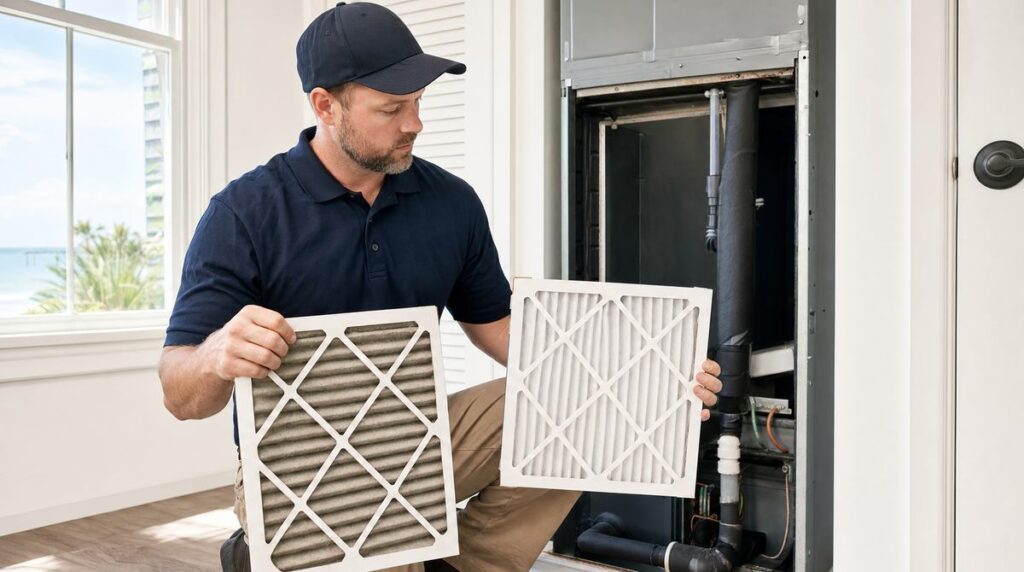
Warm air from vents despite the system running. The most direct indicator. If your thermostat calls for cooling, the air handler runs, but the air coming from supply vents is only slightly cooler than room temperature (or warm), refrigerant is the first thing to check after confirming the filter is clean and the outdoor condenser is running.
Ice forming on the indoor coil or refrigerant lines. Counterintuitively, low refrigerant causes ice formation. When refrigerant pressure drops below normal, the remaining refrigerant absorbs more heat than designed per unit mass, overcooling the evaporator coil below the dewpoint. Moisture in the air condenses and freezes on the coil, eventually blocking airflow entirely. If you see frost on the indoor unit or on copper refrigerant lines, shut the system off and call for service immediately.
Hissing or bubbling sounds. A refrigerant leak under pressure makes a hissing sound; a liquid-phase leak can produce a bubbling or gurgling noise. These sounds from the indoor unit, line set, or outdoor unit should be investigated promptly.
Higher-than-normal electricity bills. A system running with insufficient refrigerant has to work much harder to achieve the same cooling result, often running continuously without reaching setpoint. This shows up directly in your electric bill before it is obvious in comfort.
R-22 Phaseout: What Grand Strand Homeowners Need to Know
If your air conditioner is 15 years old or older, it likely uses R-22 refrigerant (often called Freon). The EPA completed the production phaseout of R-22 in January 2020, and the remaining supply is recycled/reclaimed stock that has become significantly more expensive — R-22 now costs $50–$100 per pound compared to $5–$15 for R-410A. Recharging an R-22 system with a leak is increasingly cost-prohibitive.
For R-22 systems, we recommend a straightforward decision framework: If the system is under 15 years old and has a single, repairable leak, repair and recharge may still be cost-effective for 3–5 more years of service. If the system is 15+ years old, has recurring leaks, or the compressor is failing, replacement with a modern R-410A or R-454B system is almost always the better financial decision. The EPA’s refrigerant transition guidance provides additional resources on phaseout timelines and compliance requirements.
Our team at MCC Fix My AC can assess your R-22 system honestly and help you compare the cost of continued repair against the investment in a new high-efficiency system. Given South Carolina’s long cooling season, a new 16+ SEER2 system typically pays back in lower electricity costs within 5–8 years for most North Myrtle Beach households.
Professional Refrigerant Service: What It Includes
When MCC Fix My AC performs a refrigerant service call at your North Myrtle Beach home, we follow a systematic process to ensure we address the root cause — not just the symptom.
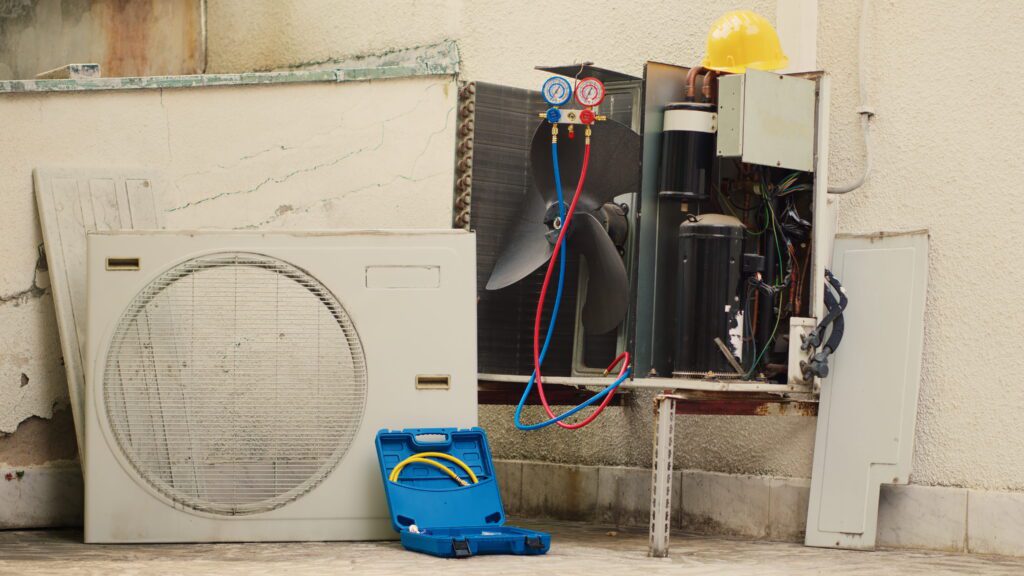
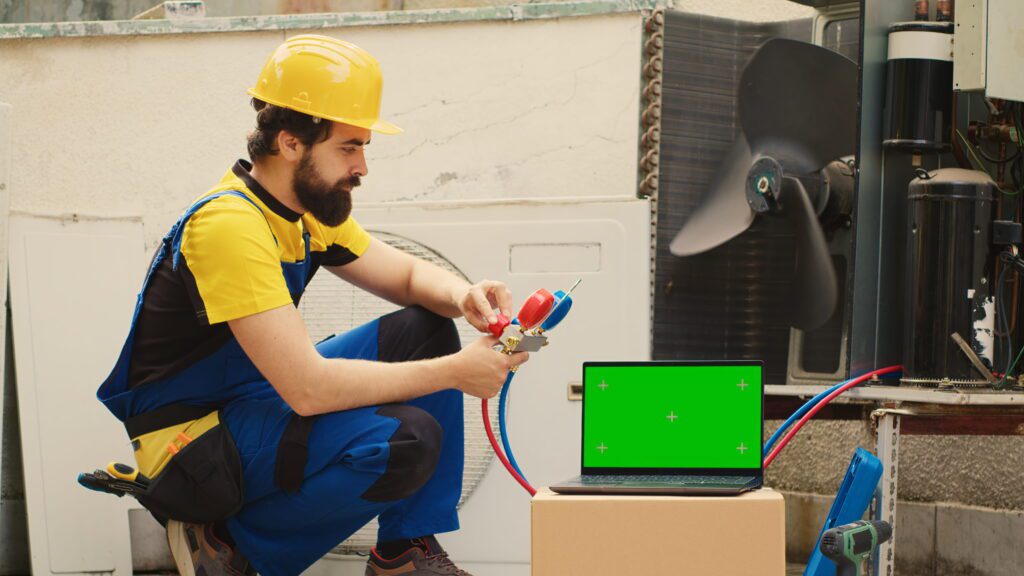
Pressure and temperature diagnostics. We attach manifold gauges to the service ports and measure actual suction and discharge pressures, superheat, and subcooling. These values — compared to the manufacturer’s specifications for your specific refrigerant and ambient conditions — tell us precisely whether the system is undercharged and by how much.
Leak detection. Electronic leak detectors are used to probe the full refrigerant circuit: evaporator coil, condenser coil, line set fittings, and service valves. For suspected formicary corrosion in coastal homes, we use UV dye injection followed by UV lamp inspection for pinhole leaks that electronic sensors can miss.
Leak repair. Minor leaks at accessible fittings are brazed or reflared. Coil leaks on older evaporator coils often require coil replacement because individual leak repairs on corroded copper tube bundles have high recurrence rates. We will give you an honest assessment of whether repair or coil replacement is more cost-effective for your situation.
Recharge to factory specification. After confirming the repair is holding, we recharge the system to the manufacturer’s specified charge weight (or to superheat/subcooling specifications for systems with a sight glass or manufacturer-provided charging charts). Overcharging is just as damaging as undercharging — precise measurement matters.
Visit our services page for the full list of HVAC services we provide in the Grand Strand area.
Frequently Asked Questions About AC Refrigerant in North Myrtle Beach
Can I add refrigerant to my AC system myself?
No. Section 608 of the Clean Air Act prohibits the purchase and handling of refrigerants by non-certified technicians. Refrigerant purchase requires EPA Section 608 certification. Beyond legal requirements, improper refrigerant handling is a safety hazard, and overcharging a system can destroy a compressor quickly. Always use a licensed HVAC technician for refrigerant service.
How much refrigerant does a typical residential AC hold?
Residential systems typically hold 5–15 pounds of refrigerant depending on tonnage and system type. A 3-ton residential split system typically holds 7–10 pounds of R-410A. Costs for refrigerant recharge in North Myrtle Beach, SC currently run approximately $150–$350 for a standard recharge service, depending on the amount of refrigerant needed and the access complexity of your specific system.
My AC is low on refrigerant. Can you just add more without finding the leak?
We can, but we will strongly advise against it. Adding refrigerant without finding the leak means you will need the same service in 6–24 months as the charge slowly depletes again. More importantly, section 608 regulations require technicians to repair “substantial” refrigerant leaks (over a threshold based on system size) rather than simply recharging. We always recommend leak detection and repair as part of any recharge service.
Is low refrigerant dangerous for my health?
Modern refrigerants (R-410A, R-454B) are not toxic at normal atmospheric concentrations, but refrigerant leaks inside the home at high concentrations can displace oxygen in enclosed spaces. In practice, residential refrigerant leaks are almost always in the line set and coil rather than indoor spaces, and the amounts involved are small. The greater practical risk is compressor damage from running a severely undercharged system.
Schedule Refrigerant Service in North Myrtle Beach, SC
MCC Fix My AC provides professional refrigerant leak detection, repair, and recharge service throughout North Myrtle Beach, Myrtle Beach, Conway, Little River, and all of Horry County. Our certified HVAC technicians use calibrated manifold gauges and electronic leak detection equipment to diagnose and fix refrigerant issues correctly the first time.
Call us or visit our contact page to schedule your refrigerant service. For emergency AC service, visit our AC repair page for availability.