Don't Miss Our Limited-Time HVAC Savings for North Myrtle Beach Homeowners
Air conditioners rarely stop working without warning. In most cases, they give a series of subtle (and sometimes not-so-subtle) signals before they completely break down. The problem is that many homeowners either ignore these early signs or mistake them for minor issues. By the time the system finally stops working, the repair cost is usually much higher—or the entire unit may need replacement.
Understanding the early warning signs of AC failure can help you avoid sudden breakdowns, expensive emergency repairs, and uncomfortable days in extreme heat. This guide breaks down the most common indicators that your air conditioner is on its way out and what you should do about each one.
1. Weak or Reduced Airflow
One of the earliest and most noticeable signs of trouble is weak airflow coming from your vents. If your AC is running but the air coming out feels faint or inconsistent, something is not right.
Common causes include:
- Clogged air filters
- Failing blower motor
- Blocked or leaky ductwork
- Dirt buildup inside the system
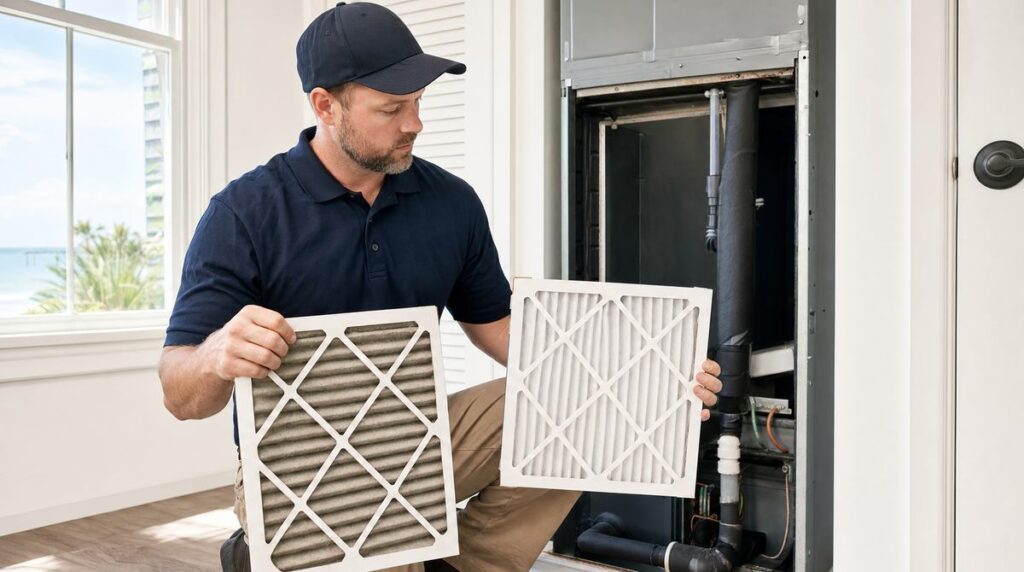
A dirty air filter is the simplest issue and often overlooked. When airflow is restricted, your system is forced to work harder, which accelerates wear and tear on internal components. If replacing the filter doesn’t fix the issue, the problem may be deeper inside the system.
Why it matters:
Reduced airflow not only affects comfort but also puts stress on your compressor and evaporator coil, both of which are expensive to repair or replace.
2. Warm Air Instead of Cool Air
If your air conditioner is blowing warm or room-temperature air, it’s a strong indicator that something is failing.
Possible reasons:
- Low refrigerant levels (due to leaks)
- Compressor issues
- Thermostat malfunction
- Dirty condenser coils
Refrigerant is essential for cooling. If there’s a leak, your system won’t just perform poorly—it will continue to degrade until it stops working completely.
Warning sign: If you notice the cooling gets worse over time instead of suddenly stopping, it’s often a refrigerant leak.
3. Frequent On-and-Off Cycling (Short Cycling)
Short cycling occurs when your AC turns on and off more frequently than normal without completing a full cooling cycle.
Causes include:
- Oversized or undersized unit
- Faulty thermostat
- Electrical issues
- Dirty condenser coils
- Low refrigerant
Short cycling is one of the most damaging issues because it prevents the system from running efficiently. Every time the compressor starts, it experiences high electrical stress.
What it leads to:
Higher electricity bills, uneven cooling, and premature compressor failure.
4. Unusual Noises Coming from the Unit
Air conditioners are not silent, but they should produce a consistent, low-level operating sound. If you start hearing unusual noises, it’s a sign that components are wearing out or loose.
Sounds to watch for:
- Grinding: Motor bearing issues
- Screeching: Belt or fan problems
- Banging: Loose or broken internal parts
- Clicking: Electrical relay issues
- Hissing: Possible refrigerant leak
These sounds should never be ignored. What starts as a minor mechanical issue can quickly escalate into system failure if not addressed.
5. Bad or Musty Smells from Vents
If your AC smells unpleasant when running, it’s often a sign of internal contamination or electrical problems.
Common odor types:
- Musty smell: Mold or mildew in ductwork or coils
- Burning smell: Electrical issue or overheating components
- Rotten smell: Moisture buildup or clogged drain line
Mold growth is especially common in humid environments. When moisture accumulates inside the unit, it creates the perfect environment for bacteria and fungi.
Important: A burning smell should be treated as urgent, as it may indicate wiring problems that could become a fire hazard.
6. Rising Energy Bills Without Increased Usage
If your electricity bill is increasing even though your usage habits haven’t changed, your air conditioner may be losing efficiency.
Why this happens:
- Dirty coils forcing the system to work harder
- Aging compressor losing efficiency
- Refrigerant leaks reducing cooling capacity
- Blocked airflow causing longer run times
An inefficient AC consumes more power to deliver the same level of cooling. This is often one of the earliest financial warning signs of system failure.
7. Moisture or Leaks Around the Unit
While condensation is normal in air conditioners, visible leaks or excessive moisture are not.
Possible causes:
- Clogged condensate drain line
- Frozen evaporator coils
- Refrigerant leak
- Broken drain pan
Water pooling around your indoor or outdoor unit should never be ignored. If left unresolved, it can lead to:
- Water damage to your home
- Mold growth
- Electrical hazards
- Further AC damage
8. AC Runs Constantly but Doesn’t Cool Properly
If your air conditioner seems to run non-stop but still struggles to maintain a comfortable temperature, it’s a strong sign of declining performance.
Common reasons:
- Low refrigerant levels
- Failing compressor
- Dirty coils
- Poor insulation or duct leaks
When the system can no longer reach the thermostat setting efficiently, it compensates by running longer cycles. This puts continuous strain on all components and accelerates breakdown.
9. Thermostat Problems or Inconsistent Temperatures
If different rooms feel noticeably different in temperature or the thermostat reading doesn’t match the actual room temperature, your system may be struggling.
Potential issues:
- Faulty thermostat sensor
- Poor air circulation
- Duct leakage
- Failing AC components
Inconsistent cooling often points to a system that is no longer able to distribute air properly, which may indicate declining fan or compressor performance.
10. Frozen Evaporator Coils
Ice forming on your AC’s indoor coils is a serious warning sign. It usually means airflow or refrigerant issues.
Causes include:
- Restricted airflow (dirty filter or blocked ducts)
- Low refrigerant levels
- Malfunctioning blower fan
When coils freeze, the system cannot absorb heat properly, resulting in poor cooling performance. If ignored, it can lead to compressor failure.
11. Aging System (10–15+ Years Old)
Even if your AC is still functioning, age alone is a major factor in potential failure. Most air conditioners have a lifespan of about 10–15 years depending on usage and maintenance.
Older systems tend to:
- Lose efficiency
- Require frequent repairs
- Consume more electricity
- Use outdated refrigerants
If your system is approaching or past this age range and showing multiple warning signs, replacement is often more cost-effective than repeated repairs.
12. Electrical Issues or Frequent Tripping Breakers
If your AC causes circuit breakers to trip or shows signs of electrical instability, it’s a serious concern.
Possible causes:
- Overheating compressor
- Wiring issues
- Capacitor failure
- Electrical overload
Electrical problems not only indicate AC failure but also pose safety risks. These issues should be inspected immediately by a qualified technician.
What You Should Do When You Notice These Signs
Catching problems early can make a huge difference in repair costs and system lifespan. Here’s what you should do:
1. Don’t ignore small issues
Even minor symptoms like weak airflow or strange noises can signal bigger internal problems.
2. Replace or clean filters regularly
This simple step prevents many airflow and efficiency issues.
3. Schedule professional maintenance
A yearly HVAC inspection can catch refrigerant leaks, coil issues, and electrical faults early.
4. Avoid overworking the system
Setting extremely low temperatures forces the AC to run longer and wear out faster.
5. Consider repair vs replacement carefully
If your system is old and repair costs are high, replacement may be the smarter long-term choice.
Final Thoughts
Your air conditioner almost never fails suddenly—it gives warning signs well in advance. From weak airflow and strange noises to rising energy bills and inconsistent cooling, each symptom tells you something important about the health of your system.
The key is to act early. A small repair today can prevent a major breakdown tomorrow. And if your system is older, these warning signs may be indicating that it’s time to plan for a replacement rather than another repair.
Pay attention to what your AC is telling you—it’s usually more communicative than we think.