Don't Miss Our Limited-Time HVAC Savings for North Myrtle Beach Homeowners
Heat pumps are one of the most popular HVAC systems for homeowners in North Myrtle Beach because they provide both heating and cooling in a single unit. They are energy-efficient, versatile, and ideal for the mild coastal climate found throughout South Carolina. However, the same weather conditions that make the area attractive for residents and vacationers can place significant stress on heat pump systems year-round.
High humidity, salty coastal air, frequent storms, and fluctuating seasonal temperatures all affect how efficiently a heat pump operates. Over time, these conditions can cause wear and tear that leads to reduced performance, higher utility bills, and costly breakdowns.
Many homeowners do not notice the early warning signs of heat pump trouble until comfort problems become severe or the system fails entirely. Understanding the symptoms of a struggling heat pump can help homeowners address issues early, protect indoor comfort, and extend the lifespan of their HVAC equipment.
Why North Myrtle Beach Weather Is Hard on Heat Pumps
North Myrtle Beach experiences a unique coastal climate that impacts HVAC systems differently than inland areas.
Local heat pumps must regularly handle:
- High humidity levels
- Salt-laden ocean air
- Heavy summer cooling demands
- Sudden weather changes
- Seasonal storms
- Mild but damp winters
Because heat pumps run throughout the entire year instead of only during one season, they experience more operational wear than traditional heating or cooling systems alone.
Unlike furnaces that rest during summer months, heat pumps continuously cycle between cooling and heating modes depending on the season. This constant use means coastal weather exposure becomes an ongoing challenge rather than a seasonal issue.
Your Heat Pump Runs Constantly
One of the most common signs of trouble is a heat pump that seems to run nonstop.
During hot and humid North Myrtle Beach summers, heat pumps naturally operate longer than they would in milder climates. However, if your system rarely shuts off or struggles to reach the thermostat setting, it may indicate a larger problem.
Possible causes include:
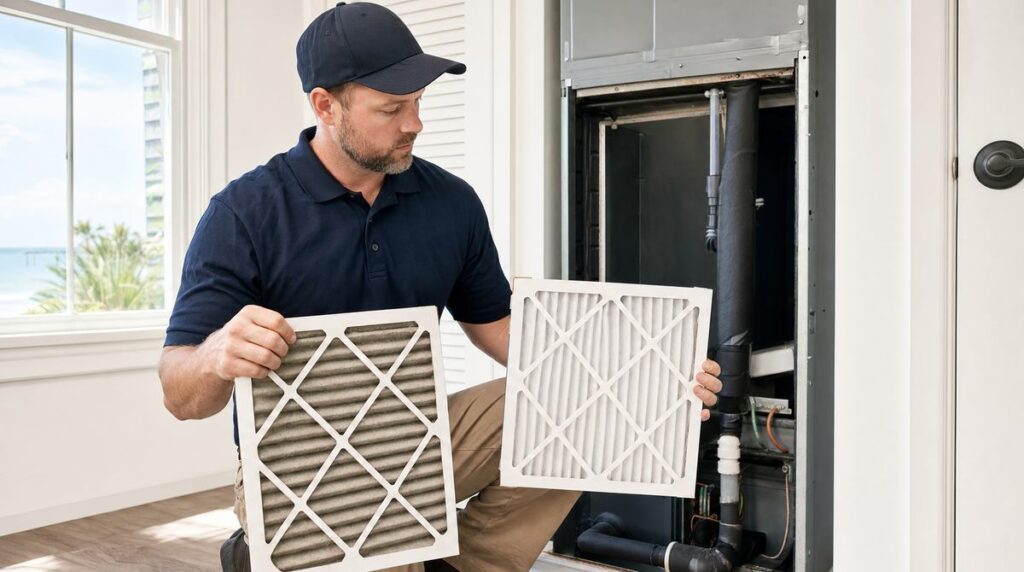
- Dirty air filters
- Refrigerant issues
- Dirty evaporator coils
- Leaky ductwork
- Compressor problems
- Poor airflow
- Oversized or undersized equipment
High humidity can also force heat pumps to run longer because the system is trying to remove excess moisture while cooling the home.
Continuous operation not only increases energy bills but also accelerates wear on major components.
Rising Energy Bills Without Increased Usage
A sudden increase in utility bills often signals declining HVAC efficiency.
As heat pumps struggle against coastal humidity and salt air exposure, components may lose efficiency and require more electricity to maintain indoor comfort.
Common efficiency-reducing problems include:
- Corroded outdoor coils
- Refrigerant leaks
- Failing motors
- Dirty coils
- Blocked airflow
- Aging equipment
Because heat pumps operate year-round, even small efficiency losses can create noticeable increases in monthly energy costs.
If your electricity bills continue climbing despite normal thermostat settings and household habits, your heat pump may be working harder than necessary to overcome performance problems.
Uneven Temperatures Throughout the Home
A healthy heat pump should maintain consistent temperatures across most areas of the house.
If some rooms feel significantly warmer or colder than others, the system may be struggling to distribute conditioned air properly.
Uneven temperatures may result from:
- Duct leaks
- Weak airflow
- Dirty coils
- Thermostat issues
- Refrigerant problems
- Improper system sizing
Coastal humidity can make uneven cooling feel even worse because moist air tends to linger in poorly ventilated spaces.
Rooms located near crawlspaces, attics, or poorly insulated exterior walls are especially vulnerable to temperature inconsistencies in humid coastal environments.
Your Home Feels Humid or Sticky Indoors
Heat pumps are designed to help control indoor humidity while cooling the home.
If your home feels damp, sticky, or clammy despite the air conditioner running, your heat pump may no longer be removing moisture effectively.
Excess indoor humidity often causes:
- Sticky indoor air
- Musty odors
- Window condensation
- Damp carpets or bedding
- Mold growth
- Poor indoor comfort
Several issues may reduce dehumidification performance, including:
- Dirty evaporator coils
- Refrigerant problems
- Incorrect system sizing
- Clogged condensate drains
- Short cycling
In North Myrtle Beach, humidity control is just as important as temperature control. Homes with excessive indoor moisture often feel uncomfortable even when thermostat readings appear normal.
Ice Forms on the Outdoor Unit
Ice buildup on a heat pump is never normal during warm weather.
Many homeowners assume freezing only happens in winter, but heat pumps can develop ice during summer if airflow or refrigerant problems exist.
Common causes include:
- Dirty coils
- Refrigerant leaks
- Blocked airflow
- Failing blower motors
- Clogged filters
When airflow becomes restricted, the evaporator coil temperature can drop too low and create ice accumulation.
Coastal humidity can worsen this issue because excess moisture freezes more easily on already cold components.
If homeowners notice frost or ice on the outdoor unit during hot weather, professional service should be scheduled promptly.
Strange Noises Are Becoming More Frequent
Heat pumps naturally make some operational sounds, but unusual noises often signal mechanical trouble.
Homeowners should pay attention to sounds such as:
- Grinding
- Squealing
- Banging
- Rattling
- Buzzing
- Clicking
These noises may indicate:
- Loose components
- Motor failure
- Electrical issues
- Fan blade damage
- Compressor problems
Salt air corrosion is especially problematic for outdoor units near the coast because moisture and salt gradually deteriorate metal parts and electrical connections.
Ignoring unusual noises can allow minor issues to develop into major repairs.
Weak Airflow From Vents
Poor airflow is another sign that a heat pump may be struggling.
Weak airflow makes it difficult to maintain comfortable indoor temperatures and forces the system to operate longer.
Common causes include:
- Dirty air filters
- Blocked ducts
- Blower motor issues
- Dirty coils
- Duct leaks
Humidity-related buildup inside ductwork and coils can further restrict airflow over time.
Homeowners may notice certain rooms receiving little airflow while others feel normal. Weak airflow combined with high humidity often creates significant comfort problems during coastal summers.
Frequent Cycling On and Off
Short cycling occurs when a heat pump turns on and off too frequently.
Instead of completing full cooling or heating cycles, the system repeatedly starts and stops before properly conditioning the home.
This can result from:
- Oversized equipment
- Thermostat issues
- Refrigerant problems
- Electrical malfunctions
- Restricted airflow
Short cycling is especially problematic in humid climates because the system does not run long enough to adequately remove moisture from indoor air.
Frequent cycling also places additional strain on compressors and motors, increasing the risk of premature failure.
The Outdoor Unit Shows Signs of Rust or Corrosion
Coastal salt air is one of the biggest threats to HVAC systems in North Myrtle Beach.
Salt particles in the air accelerate corrosion on outdoor heat pump components, including:
- Condenser coils
- Electrical connections
- Metal panels
- Fan blades
- Refrigerant lines
Visible rust, corrosion, or discoloration around the outdoor unit should never be ignored.
Corrosion reduces efficiency and can eventually lead to:
- Refrigerant leaks
- Electrical failures
- Coil damage
- Complete system breakdowns
Homes located closer to the beach often experience faster deterioration due to heavier salt exposure.
Routine maintenance and coil cleaning are essential for protecting heat pumps in coastal environments.
Your Heat Pump Struggles During Temperature Swings
North Myrtle Beach weather can change quickly during spring and fall.
Heat pumps must frequently switch between heating and cooling modes as temperatures fluctuate. Systems already under stress may struggle to adapt efficiently during these seasonal transitions.
Signs of trouble include:
- Delayed heating or cooling response
- Inconsistent temperatures
- Constant thermostat adjustments
- Reduced comfort during mild weather
A properly functioning heat pump should transition smoothly between modes without significant performance problems.
Water Leaks Around the Indoor Unit
Heat pumps naturally produce condensation during operation, but visible water leaks may indicate drainage problems.
Potential causes include:
- Clogged condensate drains
- Frozen coils
- Drain pan damage
- Excess humidity buildup
North Myrtle Beach humidity increases condensation production, making proper drainage especially important.
Ignoring leaks can lead to:
- Water damage
- Mold growth
- Indoor air quality issues
- Structural problems
Homeowners should investigate any unexplained moisture around indoor HVAC equipment immediately.
Bad Odors Coming From Vents
Unpleasant smells from vents often signal moisture-related HVAC issues.
Common odors include:
- Musty smells
- Burning odors
- Moldy air
- Dirty sock odors
High humidity creates ideal conditions for mold, mildew, and bacterial growth inside HVAC systems.
These odors may originate from:
- Dirty evaporator coils
- Moldy ductwork
- Standing water
- Clogged drain lines
- Electrical problems
Persistent odors should be professionally inspected because they may indicate indoor air quality concerns or developing mechanical failures.
Your Heat Pump Is More Than 10–15 Years Old
Age alone can contribute to declining heat pump performance.
In coastal climates like North Myrtle Beach, HVAC systems often experience shorter lifespans due to constant humidity and salt exposure.
Older systems typically become:
- Less energy efficient
- More prone to breakdowns
- More expensive to repair
- Less effective at humidity control
If your heat pump requires frequent repairs and struggles to maintain comfort, replacement may be more cost-effective than continued maintenance.
Modern heat pumps offer improved efficiency, better humidity control, and corrosion-resistant features designed for coastal climates.
Why Professional Maintenance Matters in Coastal Areas
Regular HVAC maintenance is especially important for North Myrtle Beach homeowners.
Routine service helps technicians identify and correct issues caused by:
- Salt air corrosion
- Humidity buildup
- Dirty coils
- Refrigerant loss
- Drainage problems
- Electrical wear
Preventative maintenance may include:
- Coil cleaning
- Refrigerant checks
- Electrical inspections
- Airflow testing
- Drain line cleaning
- Corrosion treatment
Because coastal systems experience harsher conditions, many HVAC professionals recommend biannual maintenance visits rather than annual inspections alone.
How Homeowners Can Help Protect Their Heat Pump
Homeowners can reduce strain on their heat pumps with several preventative steps.
Replace Air Filters Regularly
Dirty filters reduce airflow and force systems to work harder.
Keep Outdoor Units Clean
Rinsing away dirt and salt buildup helps reduce corrosion.
Schedule Routine Maintenance
Professional inspections catch small problems before they become expensive repairs.
Seal Air Leaks
Preventing humid outdoor air from entering the home reduces HVAC workload.
Install a Whole-Home Dehumidifier
Additional humidity control can improve comfort and system efficiency.
Keep Vents Open and Unblocked
Restricted airflow creates unnecessary strain on HVAC equipment.
Final Thoughts
North Myrtle Beach’s coastal climate creates unique challenges for heat pumps throughout the year. High humidity, salty air, temperature swings, and constant operation place significant stress on HVAC systems and can gradually reduce performance.
Recognizing early warning signs—such as rising energy bills, poor humidity control, uneven temperatures, corrosion, strange noises, and constant runtime—can help homeowners avoid costly repairs and unexpected breakdowns.
With regular maintenance, proper humidity management, and prompt repairs, homeowners can protect their heat pumps, improve indoor comfort, and extend system lifespan despite the demanding coastal environment.